Next.js vs TanStack in 2026: Which JavaScript Framework Should You Really Choose?

- Published on
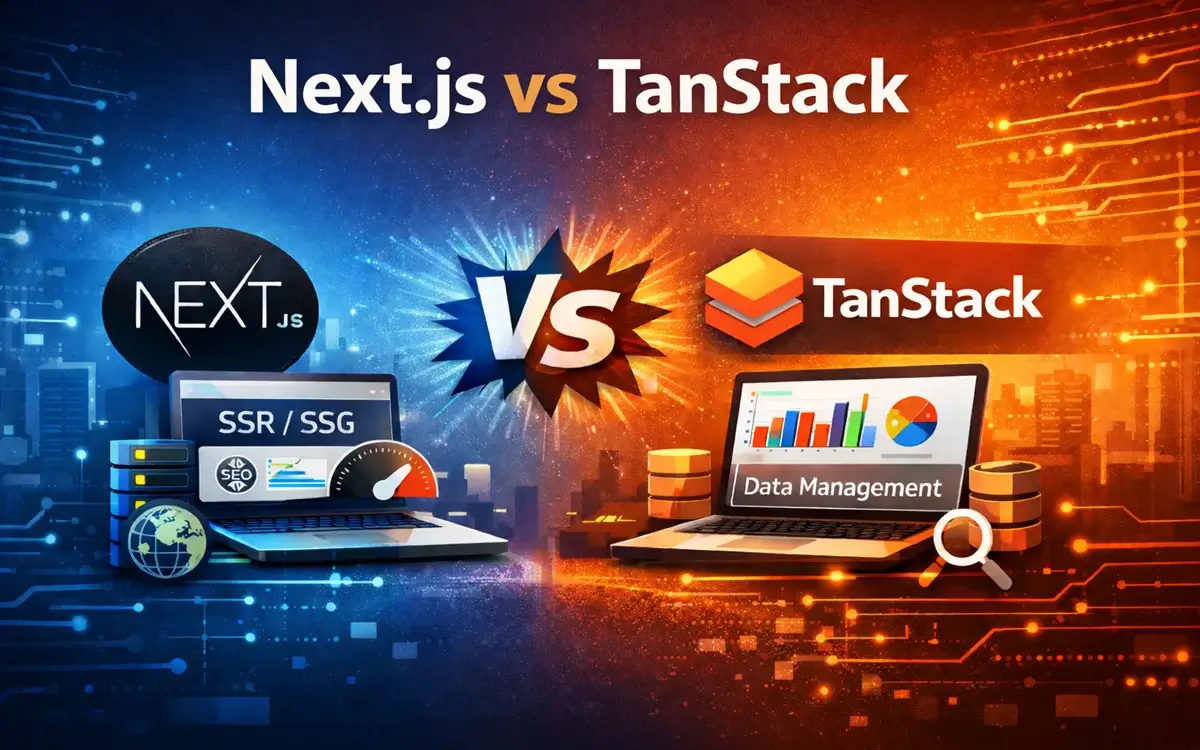
For most teams in 2026, Next.js is still the safer, production‑proven default, while TanStack Start (often just called “TanStack” in this context) is a powerful alternative when you want maximum type safety, fine‑grained control over routing/data, and Vite‑powered performance. The right choice depends on whether you prefer an opinionated, batteries‑included framework (Next.js) or a lean, data‑first meta‑framework that plays nicely with the broader TanStack ecosystem (TanStack Start). codertrove
What this article covers
This guide compares Next.js 15 and TanStack Start across routing, data fetching, rendering modes, performance, DX, and ecosystem maturity so readers can make a confident 2026 decision. It leans practical: instead of generic pros/cons, you get clear recommendations for SaaS dashboards, content sites, SPAs, and greenfield products.
Quick decision guide
- Choose Next.js if you want a widely adopted, full‑stack React framework with first‑class React Server Components (RSC), App Router, and deep Vercel integration for SEO‑heavy and content‑driven apps.
- Choose TanStack Start if you care about type‑safe routing, data‑first workflows, Vite‑powered builds, and fine‑grained control over SSR/streaming in SPA‑like apps and dashboards.
What is Next.js in 2026?
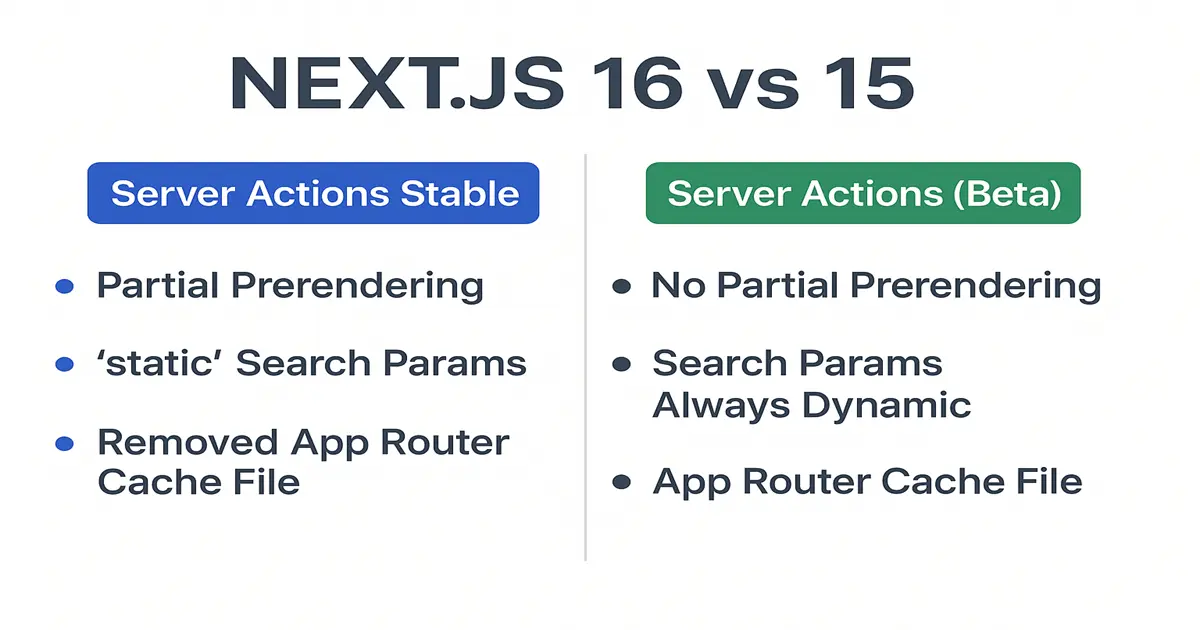
Next.js is a full‑stack React framework maintained by Vercel, offering routing, data fetching, API routes, and hybrid rendering (SSR, SSG, ISR, RSC) under one opinionated umbrella. Version 15 doubles down on React Server Components, App Router, dynamic HTML streaming, and Turbopack improvements to ship less JavaScript and improve performance and SEO. nextjs
What is TanStack Start?
TanStack Start is a full‑stack React framework built on TanStack Router and Vite, currently in a release‑candidate stage with a feature‑complete and stable API. It provides full‑document SSR, streaming, server functions, type‑safe routing and APIs, and universal deployment targets (Cloudflare Workers, Vercel, Netlify, Node, Bun, and more). infoq
Core philosophy difference
Next.js is “server‑first and batteries‑included”: routing, rendering, data fetching, API routes, and deployment optimizations are all integrated and tuned to work best with Vercel’s platform. TanStack Start is “router‑first and data‑first”: it extends TanStack Router’s type‑safe routing and loaders into a full‑stack meta‑framework, emphasizing flexibility, smaller bundles, and incremental adoption. tanstack
High‑level comparison
| Feature / Aspect | Next.js 15 | TanStack Start |
|---|---|---|
| Core runtime | React 18/19 with RSC, App Router, Node/Edge optimized | React + TanStack Router + Vite, SPA‑first with SSR/streaming |
| Routing model | File‑based App Router, nested layouts, parallel routes | File‑based or code‑based routes with highly type‑safe router |
| Data fetching | RSC fetch, Server Actions, route segment APIs, ISR |
Route‑level loaders, server functions, tight integration with TanStack Query |
| Rendering | SSR, SSG, ISR, RSC, streaming HTML | Full‑document SSR, streaming by default, SPA hydration |
| RSC support | First‑class and stable | Uses server functions; RSC listed as unsupported/experimental in comparison table |
| Type safety | Good TS support; routes not fully type‑inferred | Deep type inference for routes, params, search, loaders |
| Tooling | Vercel‑centric, Turbopack, mature ecosystem | Vite‑powered dev/build, flexible hosting and deployment |
| Maturity | Battle‑tested, huge community, many templates | Newer, RC‑stage; growing but smaller ecosystem |
Routing and navigation
Next.js uses a file‑based App Router where folders map directly to route segments and layouts, enabling nested layouts and advanced patterns like parallel routes. TanStack Start supports both file‑based and code‑based routing through TanStack Router, with strong type inference for params, search, route context, and navigation APIs. blog.logrocket
From a UX perspective, TanStack Router’s SPA‑style navigation and SWR‑like loader caching can yield faster perceived route transitions in data‑heavy dashboards, whereas Next.js relies more on server transitions via RSC and explicit loading boundaries. Next.js gives you built‑in route prefetching and parallel routes; TanStack Router adds advanced search param handling, type‑safe search schemas, and rich navigation APIs. reddit
Data fetching models
Next.js 15 encourages data fetching inside React Server Components and Server Actions, letting you query databases and APIs directly on the server without custom API endpoints, while still supporting traditional SSR/SSG patterns. This simplifies many architectures but can make mental models more complex when mixing client and server components across large trees. codertrove
TanStack Start uses route‑level loaders and server functions built on TanStack Router and TanStack Query, aligning data fetching with routing and giving you cache‑aware, SWR‑style behavior out of the box. Because loaders share inferred types with components, you get end‑to‑end type safety around route data, navigation, and mutations, which is attractive for large, data‑heavy apps. abdulkadersafi
Rendering, SSR, and streaming
Next.js offers hybrid rendering: pure SSR, static generation, Incremental Static Regeneration (ISR), and streaming React Server Components with fine‑grained control per route or segment. In 2025–2026, many case studies show RSC significantly cutting client bundle sizes and improving load times and SEO, especially on content‑rich pages. reliasoftware
TanStack Start also supports SSR and streaming, but focuses on full‑document SSR plus SPA hydration, driven by route loaders and server functions rather than RSC. According to both the official docs and independent comparisons, its streaming SSR approach and Vite bundling can produce very competitive, often smaller bundles than traditional SSR frameworks in many scenarios. frontendmasters
Performance in real apps
Benchmarks shared in TanStack Start announcements and third‑party articles show TanStack Start achieving strong mobile performance metrics and smaller JavaScript bundles compared with some Next.js setups, thanks to its SPA‑first, Vite‑powered architecture. At the same time, Next.js 15’s deep RSC integration, improved caching, and Turbopack‑powered dev experience have measurably reduced bundle sizes and boosted runtime performance for many production apps. frontendmasters
From an SEO and Core Web Vitals perspective, both frameworks support streaming SSR and good TTFB; Next.js leans on RSC + ISR for content sites, while TanStack Start leans on fast SPA navigation plus SSR for initial documents. For heavily interactive dashboards and admin panels, TanStack’s SPA feel with loader caching can result in snappier in‑app navigation than a naive Next.js RSC implementation. tanstack
Developer experience and type safety
Next.js delivers a polished DX with strong TypeScript support, conventional file structure, and a massive ecosystem of examples, templates, and tutorials maintained by Vercel and the community. However, route definitions, search params, and navigation are not deeply type‑inferred in the same way as a router‑centric library, often requiring manual typing or IDE plugins. tanstack
TanStack Router and Start emphasize “type‑safe everything”: routes, path params, search params, route context, and navigation APIs are all driven from a central router config or file‑based definitions with strong inference. This can significantly reduce runtime routing bugs and refactor pain in large codebases at the cost of a slightly steeper learning curve for teams new to TanStack’s patterns. blog.logrocket
Ecosystem, hosting, and maturity
Next.js has years of battle‑testing, a huge community, many enterprise adoptions, and extremely tight integration with Vercel for deployments, edge functions, image optimization, and analytics. That ecosystem maturity also brings a rich plugin and starter ecosystem, making it easy to spin up marketing sites, blogs, documentation portals, SaaS templates, and more. nextjs
TanStack Start rides on the popularity of the TanStack family (Query, Table, Router, etc.) but is itself newer and currently in Release Candidate status, though the authors describe it as feature‑complete and API‑stable. Its deployment story is intentionally neutral: because it uses Vite and modern bundlers, you can target Node, Bun, and edge runtimes across providers like Vercel, Netlify, and Cloudflare Workers without lock‑in. tanstack
Learning curve and team fit
If your team already knows Next.js or has used earlier pages‑router versions, upgrading to App Router and RSC is conceptually incremental and well documented. Designers, marketers, and SEO stakeholders also tend to find more existing patterns and tooling around Next.js‑based content workflows. nextjs
TanStack Start feels most natural to teams already using TanStack Router and TanStack Query, or those who like a router‑centric mindset where data fetching and routing are tightly coupled. For greenfield, engineering‑driven products and internal tools, this can lead to a very productive developer experience with fewer framework‑imposed constraints. tanstack
When Next.js is the better choice
Next.js is a strong default when you are building content‑heavy marketing sites, blogs, documentation, or e‑commerce where SEO, RSC‑driven performance, and ISR matter. It is also ideal when you want a widely known stack for hiring, long‑term maintenance, and access to many ready‑made templates and tutorials. codertrove
Next.js also shines when you are all‑in on Vercel: the combination of framework and platform unlocks image optimization, edge middleware, analytics, and CI/CD with minimal configuration. If stakeholders expect “standard” React/Next.js skills and you want to minimize perceived platform risk, Next.js is the safer bet in 2026. nextjs
When TanStack Start is the better choice
TanStack Start is compelling for SaaS dashboards, admin panels, and data‑intensive apps where SPA‑like navigation, loader caching, and type‑safe routes significantly improve UX and maintainability. Teams already invested in TanStack Query, Table, or Router get an especially smooth upgrade path to a full‑stack meta‑framework. infoq
It is also attractive when you want Vite’s ecosystem and performance characteristics, or when you prefer a hosting‑agnostic approach and do not want to be tightly coupled to a single platform. If your engineers value types, router‑centric architecture, and having finer control over data loading and caching strategies than Next.js RSC patterns typically expose, TanStack Start is worth serious consideration. frontendmasters
Migration and long‑term thinking
Official guidance and community resources exist for migrating from existing TanStack Router apps or even from Next.js to TanStack Start, with an emphasis on incremental adoption rather than big‑bang rewrites. This allows teams to start by using TanStack Router or Query in client apps, then add Start’s SSR/server‑function layer later. abdulkadersafi
On the Next.js side, the move from pages router to App Router and RSC has largely stabilized by version 15, with many guides and tools to help upgrade older codebases. Given Vercel’s strong commercial backing and the massive installed base, Next.js remains a very low‑risk long‑term choice; TanStack Start is promising but still in the earlier phase of its adoption curve. tanstack
Practical checklist for your 2026 choice
Ask these questions before committing:
- Do you need RSC‑driven SEO and ISR for heavy content? If yes, Next.js probably wins. reliasoftware
- Do you want SPA‑like navigation, type‑safe routing, and Vite builds for data‑heavy apps? If yes, TanStack Start is a strong candidate. tanstack
- Is your deployment strategy Vercel‑centric, or multi‑cloud/edge and tooling‑agnostic? Next.js favors the former; TanStack Start is designed for the latter. nextjs
- Does your team already know Next.js, or are they fluent with TanStack Router/Query and Vite? Choose the framework that fits existing skills to reduce ramp‑up and risk. tanstack
Framed this way, you can position your 2026 stack as either: a mainstream, RSC‑powered React platform (Next.js) or a cutting‑edge, type‑safe, router‑driven meta‑framework (TanStack Start) aligned with the TanStack ecosystem—and both are strong, future‑oriented options when used in the right context. blog.logrocket